
A Peaceful Mountain Escape in Northern Vietnam
If you are looking for a place in northern Vietnam where you can slow down, walk through rice fields, stay in a traditional stilt house and wake up to misty mountain valleys, Pu Luong is one of the destinations I would recommend.
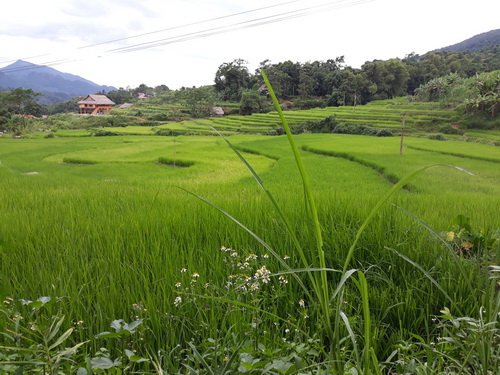
Located in Thanh Hoa Province, around four to five hours from Hanoi, Pu Luong Nature Reserve is a beautiful mountain region of limestone peaks, forested valleys, terraced rice fields, streams and traditional villages. The reserve covers more than 17,600 hectares and is home to communities of Thai and Muong people who have lived among these mountains for generations.
But Pu Luong is not a destination you visit simply to see one famous landmark.
Pu Luong is a place you experience slowly.
You walk along narrow paths between rice terraces. You pass wooden water wheels turning quietly beside streams. You see buffalo grazing in the fields and traditional houses standing beneath the mountains. In the evening, you sit on a wooden balcony and watch the last light disappear over the valley.
That slower pace is what makes Pu Luong special.
A Different Side of Northern Vietnam
Many travelers first discover northern Vietnam through famous destinations such as Hanoi, Ha Long Bay and Sapa.
Pu Luong offers something different.
There is no busy town center, no long list of major monuments and no need to rush from one attraction to another.
Instead, the landscape itself becomes the attraction.
The roads wind through mountain valleys. Small villages are scattered among rice fields. Forest covers the limestone mountains, while streams flow down through the valleys and feed the rice terraces.
For travelers who enjoy nature, walking, photography and authentic rural life, Pu Luong can be one of the most rewarding places to visit in northern Vietnam.
It is especially appealing to people who want to experience the countryside without completely leaving comfort behind.
The Rice Terraces of Pu Luong
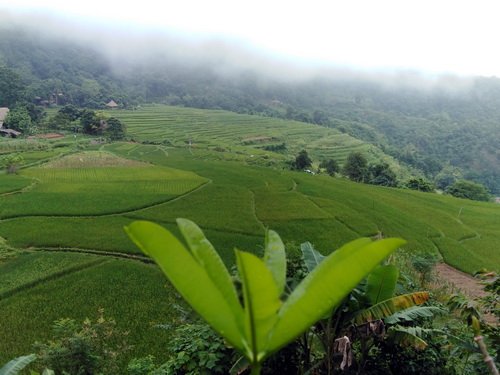
The first thing many visitors notice in Pu Luong is the rice.
Terraced fields cover the lower slopes and valleys around the villages, creating layers of green or gold depending on the season.
But unlike some of Vietnam’s more dramatic highland destinations, the beauty here is not about enormous mountain peaks.
It is about the relationship between the mountains and the people who cultivate them.
Rice fields follow the natural shape of the valleys. Small paths run between the terraces. Traditional houses sit among the fields, and farmers continue to work the land using methods that have been adapted to this mountainous environment over generations.
In late May and early June, the young rice creates vibrant green landscapes. Around September and October, the fields turn golden as the harvest approaches.
If you have seen photographs of Pu Luong covered in golden rice, remember that this is a seasonal landscape.
The scenery changes throughout the year — and that is part of its charm.
Walking Through the Villages
The best way to understand Pu Luong is not from the window of a car.
It is on foot.
Many of the most enjoyable experiences involve walking between villages along small paths that cross rice fields, bamboo groves and forested valleys.
You may pass a farmer working in the field, children playing near a house, chickens wandering across a village path or a buffalo resting beside a rice terrace.
These moments are simple, but they are exactly what many travelers come to Pu Luong to experience.
Popular areas for walking and trekking include Don Village, Uoi Village, Lan Village, Kho Muong and Hieu Village, each offering different landscapes and village experiences.
You do not necessarily need to be an experienced trekker.
There are gentle walks suitable for travelers who simply want to explore the countryside, as well as longer and more demanding routes for those who enjoy hiking.
The important thing is to choose a route that matches your fitness and interests.
Traditional Thai Villages
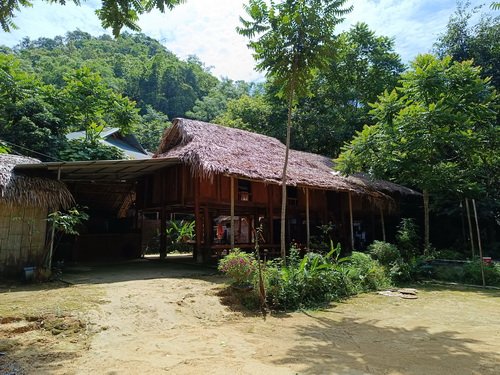
One of the most interesting parts of Pu Luong is its local culture.
The valleys are home mainly to Thai and Muong communities, whose traditional way of life remains closely connected to farming, forests and the surrounding landscape.
Traditional wooden stilt houses are one of the defining features of the villages.
Rather than simply visiting a cultural attraction, you can see these houses as part of an actual living community.
People cook, work, raise animals and welcome visitors in the same places where their families have lived for generations.
For me, this is one of the reasons Pu Luong feels different from a conventional tourist destination.
The culture is not presented as a performance. It is part of everyday life.
If you have the opportunity to stay overnight in a local homestay, you can experience this atmosphere even more closely — enjoying a home-cooked meal, talking with your hosts and waking up to the sound of village life rather than traffic.
Bamboo Water Wheels
One of the most recognizable sights in Pu Luong is the traditional bamboo water wheel.
You will often find these large wheels turning slowly beside streams and rivers in the valleys.
They may look decorative to visitors, but they have a practical purpose: traditionally, water wheels have been used to lift water from streams and channels to irrigate rice fields.
Standing beside one of these wheels and watching it turn is a very simple experience, but it tells you something important about life in the mountains.
Here, people have learned to work with the landscape rather than against it.
The mountains provide the water.
The water feeds the rice fields.
And the rice fields support the villages.
Kho Muong: One of Pu Luong’s More Remote Villages
For travelers looking for a quieter and more adventurous experience, Kho Muong Village is one of the places worth exploring.
Hidden within the limestone landscape, Kho Muong feels more remote than some of the villages closer to the main roads.
The journey itself is part of the experience, with mountain scenery, forested slopes and village paths leading into the valley.
Nearby is Kho Muong Cave, another interesting feature of the area.
This is the kind of place where you begin to understand why Pu Luong is better experienced over several days rather than rushed through as a quick sightseeing stop.
Hieu Waterfall
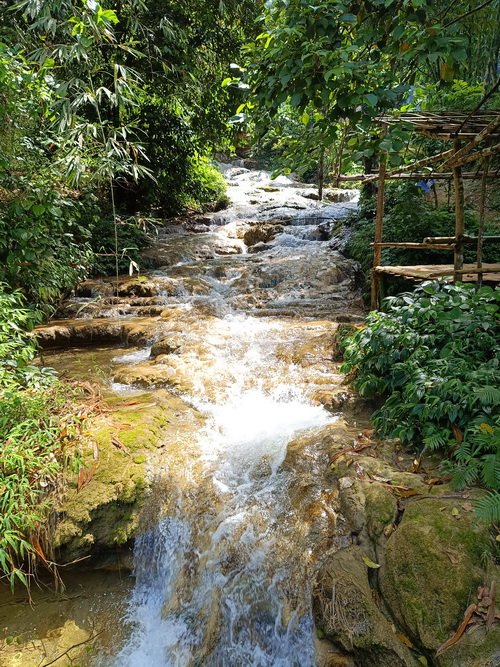
Another popular experience in Pu Luong is a visit to Hieu Waterfall.
The waterfall is located near Hieu Village, surrounded by forest and mountain scenery.
Depending on the season and recent rainfall, the flow of water can vary considerably.
The walk to the waterfall can also be part of the experience, taking you through the countryside and local village landscape.
After a walk in the mountains, there is something particularly refreshing about arriving at a natural waterfall and taking a break beside the water.
It is another example of what Pu Luong does best:
nature, village life and simple outdoor experiences in the same journey.
Pu Luong Is About Slow Travel
Perhaps the best way to describe Pu Luong is slow travel.
You do not need to fill every hour with activities.
Wake up early and watch the mist move through the valley.
Walk through the rice fields.
Stop to photograph a water buffalo.
Have lunch in a local home.
Sit on a balcony in the afternoon.
Talk to your hosts.
Then watch the sunset over the mountains.
There is no pressure to keep moving.
And after several busy days exploring Vietnam’s cities, that can be exactly what you need.
When Is the Best Time to Visit Pu Luong?
Pu Luong changes dramatically with the agricultural seasons.
Late May to Early June – Green Rice Season
This is one of the most beautiful times to see the rice terraces covered in fresh green rice.
The valleys feel particularly vibrant, and the combination of green fields, mountains and clear streams creates excellent conditions for walking and photography.
September to October – Golden Harvest Season
This is the season many photographers dream about.
The rice terraces gradually turn golden as harvest approaches, creating a completely different landscape from the green fields of early summer.
If your main reason for visiting Pu Luong is to photograph the famous golden rice terraces, this is generally the most attractive period.
Other Times of the Year
Pu Luong can still be enjoyable outside the main rice seasons.
The landscape becomes quieter, the fields change character and the mountains and villages remain beautiful.
For travelers more interested in trekking, village life and relaxation than perfect rice-field photographs, there is no need to limit your trip to only two months of the year.
How Long Should You Stay in Pu Luong?
I usually recommend at least two nights if you have the time.
A one-day visit from Hanoi is possible, but the long drive means you spend a significant part of the day on the road.
With two or three days, Pu Luong becomes much more enjoyable.
You have time to:
- Walk through several villages
- Explore the rice terraces
- Visit a waterfall
- See traditional water wheels
- Enjoy local food
- Stay in a traditional-style homestay
- Spend time with local people
- Relax without constantly watching the clock
Pu Luong rewards travelers who do not rush.
Pu Luong vs. Sapa
Travelers sometimes ask me whether they should visit Pu Luong or Sapa.
They are both beautiful mountain destinations, but the experiences are quite different.
Sapa is higher, more developed and has a larger tourism infrastructure.
Pu Luong is lower, quieter and more rural, with its experience centered more around villages, rice valleys, trekking and slow travel.
If you want a lively mountain town with restaurants, hotels and easy access to Fansipan, Sapa may be the better choice.
If you want to walk through peaceful valleys, stay in a village and experience a slower side of northern Vietnam, I would seriously consider Pu Luong.
It is not necessarily about which destination is better.
It is about which experience suits you better.
Is Pu Luong Worth Visiting?
Absolutely — especially if you enjoy destinations that are about landscape and local life rather than famous monuments.
Pu Luong does not have the dramatic scale of Ha Long Bay or the urban energy of Hanoi.
Instead, its beauty is quieter.
It is found in the terraces carved into mountain slopes, the sound of water flowing through the valley, the smoke rising from a village kitchen, the wooden houses standing among the rice fields and the people continuing their daily routines.
You do not come to Pu Luong to tick off a list of attractions.
You come to Pu Luong to slow down and experience northern Vietnam at a different pace.
Experience the Real Pu Luong
After many years of guiding travelers in northern Vietnam, one thing I have learned is that some destinations are better explained than simply photographed.
Pu Luong is one of them.
A photograph can show you the rice terraces.
It cannot show you how the water reaches the fields.
It cannot explain why the houses are built the way they are.
It cannot tell you the story of the people living in the valley.
And it certainly cannot replace walking through a village and meeting the people who call these mountains home.
That is why I enjoy taking travelers to Pu Luong.
The scenery gets your attention, but the people and the way of life are what make you remember the place.
If you are planning a trip to northern Vietnam and want to experience something quieter, more personal and closer to rural life, Pu Luong deserves a place on your itinerary.